How to Check Your Tyre Pressure?
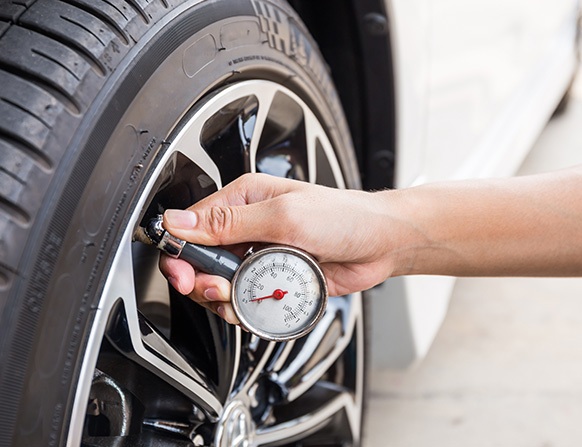
Using a tyre gauge is one of the quickest and easiest ways to check if your tyres are inflated correctly. Here’s how to check tyre pressure:
- Unscrew and remove the dust cap from the tyre valve.
- Place the tyre pressure gauge firmly onto the valve stem to get an accurate seal.
- Apply gentle pressure to the gauge until it displays a reading.
- Review the reading to determine if the tyre needs more air or should be deflated.
- Repeat the process for all four tyres, as each tyre’s pressure can vary.
- Be sure to check the pressure of your spare tyre as well, since it naturally loses air over time.
If you don’t have a tyre pressure gauge at home, you can always visit your local HiQ centre, where we’ll check your tyre pressure for you. Many fuel stations also offer an air pump service, sometimes for free.
When should tyre pressure be checked?
You should check your tyre pressure at least every two weeks and before long journeys or motorway driving. Tyres naturally lose around 1 PSI (0.07 BAR) per month, and driving with incorrect pressure can lead to uneven tread wear, reduced fuel efficiency and poorer handling.
It’s best to check your tyre pressure when the tyres are cold, meaning the car has been driven less than 2 miles. When tyres are warm, the air inside expands and pressure increases, which can give an inaccurate reading.
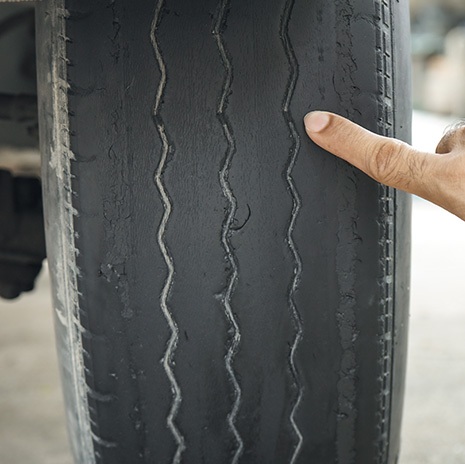
Make tyre pressure checks part of your regular vehicle maintenance routine, alongside checking your tyre tread depth and inspecting tyres for any visible damage.
Cars manufactured after 2012 are typically fitted with a Tyre Pressure Monitoring System (TPMS). This system alerts you if tyre pressure drops below the recommended level, but you should still check your tyres manually to ensure they are correctly inflated.
Understanding your Tyre Pressure Monitoring System (TPMS)
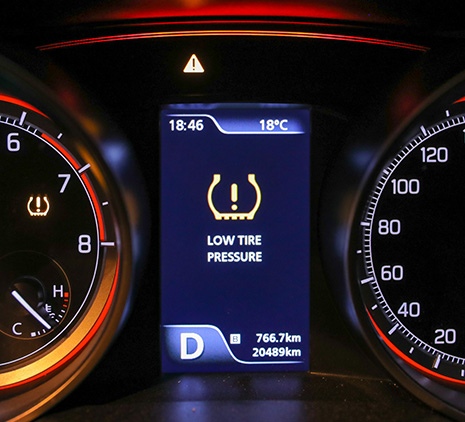
A tyre pressure monitoring system alerts the driver when at least one tyre is under-inflated. Tyre Pressure Monitoring Systems monitor tyre pressure without the need for a gauge and advise motorists by showing an illuminated symbol on the dashboard panel.
Most cars manufactured after 2012 in the UK and EU are fitted with a Tyre Pressure Monitoring System (TPMS) as standard.
You can usually tell if your car has TPMS if you:
- Look for a warning light on the dashboard shaped like a tyre with an exclamation mark inside.
- Check your vehicle handbook.
- Look in your car’s settings menu for tyre pressure information.
If the warning light comes on, it means one or more tyres may need to be checked and inflated. The tyre pressure warning symbol resembles a horseshoe shape with an exclamation mark in the centre. This icon appears on modern dashboards when tyre pressure drops below recommended levels.
Book a TPMS Service with HiQ today to ensure your system is working correctly.